A story told for thousands of years, Pesach invites us to reflect on freedom not as a moment in history, but as an ongoing journey.
Passover, or Pesach, is one of the most foundational stories in Jewish tradition—a narrative that has endured for thousands of years because it speaks to something deeply human: the longing to be free.
At its core, Passover tells the story of the Israelites’ liberation from slavery in ancient Egypt. Under the rule of Pharaoh, they endured generations of forced labor and oppression. The story unfolds through a series of divine interventions—the Ten Plagues, the courage of Moses, and ultimately, the Exodus itself—culminating in a people stepping out of bondage and into uncertainty, guided only by faith and the promise of something greater.
But Passover is not simply a historical recounting. It is a living narrative, retold each year at the Seder table, where participants are asked not just to remember the story—but to see themselves within it.
Freedom: More Than Physical Release
Freedom in the Passover story is not limited to physical escape. The Israelites leave Egypt quickly, with little time to prepare, carrying unleavened bread as a symbol of urgency and transition. Yet their journey into the wilderness reveals that true freedom is not immediate—it unfolds over time.
This distinction is central. Passover invites reflection on the forms of “Egypt” that still exist today—not just external constraints, but internal ones as well. Limiting beliefs, fear, complacency, and disconnection can all function as modern-day forms of bondage.
The question becomes: what does it mean to be truly free?
Liberation: A Collective Experience
The Exodus is not an individual story—it is communal. Liberation happens together. Families, elders, children—all move forward as one.
This collective dimension is embedded in the Seder itself. The rituals, the questions, the symbolic foods—each element is designed to engage everyone at the table. The youngest asks, “Why is this night different?” and the community responds, reinforcing that freedom is sustained through shared memory and participation.
Passover reminds us that liberation is not a solitary achievement. It is something we build, protect, and pass on together.
Hope: The Thread That Carries the Story Forward
Perhaps the most enduring theme of Passover is hope.
Even in the darkest moments of the story—when oppression feels absolute—there is a quiet persistence of belief that change is possible. The Israelites step into the unknown without a clear map, sustained by trust.
This is echoed at the end of every Seder with the phrase, “Next year in Jerusalem.” It is both literal and symbolic—a declaration that the story is not finished, that redemption is ongoing.
Hope, in this context, is not passive. It is an active stance—a willingness to move forward even when certainty is absent.
Why Passover Still Matters
What makes Passover powerful is its ability to remain relevant across generations. The specifics of the story may be ancient, but its themes are not.
- The pursuit of freedom continues in many forms around the world
- The need for collective care and responsibility remains essential
- The act of holding hope—especially in uncertain times—is as critical as ever
Passover asks each person to locate themselves within this continuum: Where am I being called to step out of limitation? What does liberation look like in my life? How do I contribute to the freedom of others?
Celebrating Passover in Community
While Passover can be observed in many ways, its deepest expression is often found in community—gathered around a table, sharing story, ritual, and reflection.
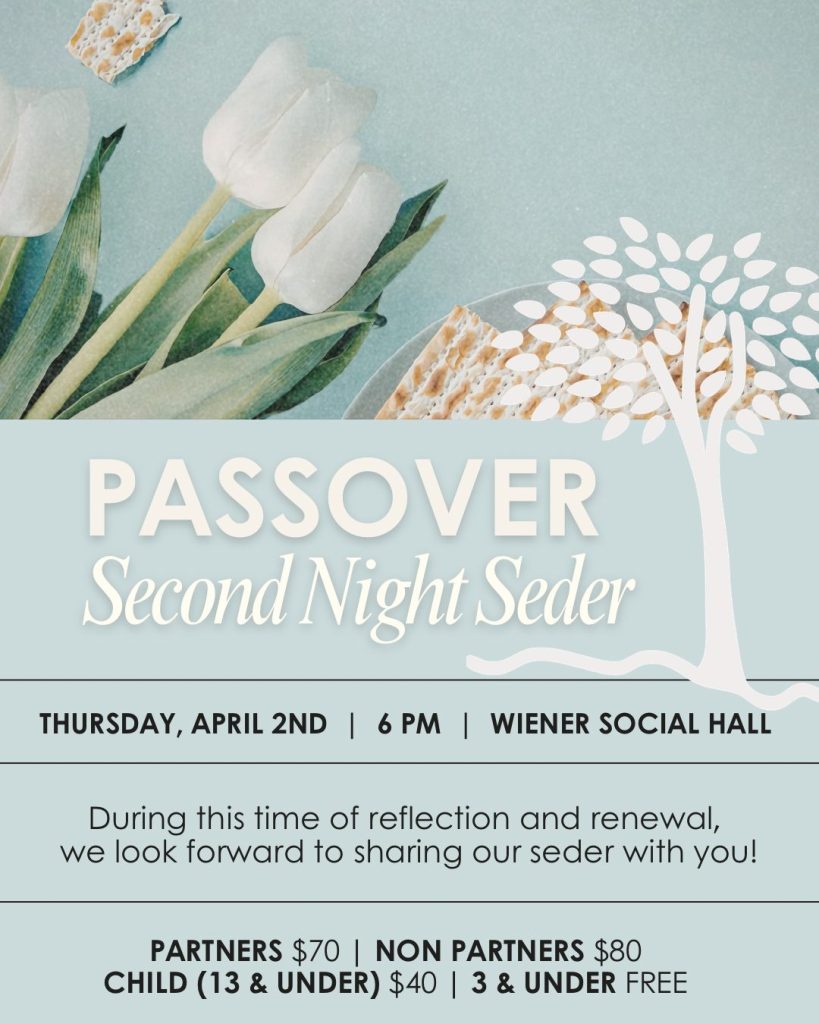
For those in South Florida, Temple Sinai offers a meaningful space to engage with the holiday through inclusive services, community Seders, and educational programming. It’s an opportunity not only to honor tradition, but to experience the story in a way that feels alive and connected to modern life.
If you’re looking to deepen your experience this year, consider exploring local Passover events and gatherings—each one offering a different doorway into the same enduring story.