From Rosh Hashanah through Simchat Torah, the High Holiday season is one of reflection, celebration, and renewal. Here’s your guide to the 2026 Jewish High Holy Days, including key dates, traditions, and what families can expect.
For Jewish families around the world, the arrival of autumn marks the beginning of one of the most meaningful seasons on the Jewish calendar. Known collectively as the High Holy Days (or Yamim Noraim, the Days of Awe), this period invites us to pause, reflect on the year behind us, celebrate new beginnings, seek forgiveness, gather with family, and reconnect with our community.
Whether you’ve celebrated these Holy Days your entire life or are attending services for the first time, the High Holy Days offer opportunities for spiritual renewal, joyful traditions, and meaningful family experiences.
At Temple Sinai, this season is one of the highlights of the year, bringing together generations of families to worship, learn, celebrate, and begin the Jewish New Year together.
2026 High Holiday Calendar
Holiday | Hebrew Dates | 2026 Dates |
Rosh Hashanah | 1–2 Tishrei 5787 | Begins Friday, September 11 (sunset) – Sunday, September 13 (nightfall) |
Yom Kippur | 10 Tishrei 5787 | Begins Sunday, September 20 (sunset) – Monday, September 21 (nightfall) |
Sukkot | 15–21 Tishrei 5787 | Begins Friday, September 25 (sunset) – Friday, October 2 (nightfall) |
Shemini Atzeret | 22 Tishrei 5787 | Begins Friday, October 2 (sunset) – Saturday, October 3 (nightfall) |
Simchat Torah(Diaspora) | 23 Tishrei 5787 | Begins Saturday, October 3 (sunset) – Sunday, October 4 (nightfall) |
Rosh Hashanah: Welcoming a New Year
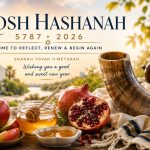
Often called the Jewish New Year, Rosh Hashanah is a celebration of new beginnings and one of Judaism’s holiest days. Families gather for festive meals, hear the sounding of the shofar, dip apples in honey as a symbol of a sweet new year, and reflect on the year that has passed while looking forward with hope.
For many families, this is also the first opportunity each year to reconnect with friends and the broader synagogue community after the summer months.
The Ten Days of Repentance
Between Rosh Hashanah and Yom Kippur are the Aseret Yemei Teshuvah—the Ten Days of Repentance.
During this period, Jewish tradition encourages us to:
- Reflect on our actions
- Repair relationships
- Practice forgiveness
- Give generously (tzedakah)
- Prepare spiritually for Yom Kippur
These ten days remind us that growth begins with honest reflection and intentional change.
Yom Kippur: The Day of Atonement
Ten days after Rosh Hashanah comes Yom Kippur, considered the holiest day of the Jewish year.
The day is traditionally observed through:
- Prayer
- Fasting
- Reflection
- Seeking forgiveness
- Reconnecting with God and community
While Yom Kippur is solemn, it is also deeply hopeful. Jewish tradition teaches that every person has the opportunity to begin again.
Sukkot: Celebrating Gratitude
Just a few days later, the mood shifts dramatically.
Sukkot is known as the Festival of Booths and celebrates both the fall harvest and the Israelites’ journey through the wilderness after leaving Egypt.
Families build and decorate a sukkah, enjoy meals outdoors, welcome guests, and celebrate the blessings of community and gratitude.
For children especially, Sukkot is one of Judaism’s most interactive Holy Days.
Shemini Atzeret & Simchat Torah
Immediately following Sukkot come Shemini Atzeret and Simchat Torah, Holy Days that celebrate both gathering together and the joy of Torah.
On Simchat Torah, congregations complete the annual reading of the Torah and immediately begin again with Genesis, reminding us that Jewish learning is a lifelong journey.
Many synagogues celebrate with singing, dancing, and joyful processions carrying Torah scrolls.
Celebrating the High Holy Days at Temple Sinai
The High Holy Days are about more than attending services—they are about reconnecting with family, friends, faith, and community.
Throughout the season, Temple Sinai welcomes members, guests, and first-time visitors to experience:
- High Holiday worship services
- Family-friendly programming
- Children’s experiences
- Opportunities for reflection and learning
- Community gatherings
Whether you’re returning each year or exploring Judaism for the first time, Temple Sinai strives to create a welcoming environment for every generation.
Families with young children can also continue exploring Jewish traditions year-round through Gan Sinai Preschool, the Learning Lab, and the many educational opportunities available through I AM Sinai.
Looking Ahead
Over the coming weeks, we’ll take a closer look at each of these meaningful Holy Days, exploring their history, traditions, family customs, and the ways they continue to inspire Jewish life today.
Until then, we wish you and your family a season filled with reflection, renewal, peace, and a sweet New Year.