Rosh Hashanah invites us to pause, reflect, and begin again. Explore the meaning and traditions of the Jewish New Year, from the sounding of the shofar and apples and honey to meaningful ways families can welcome 5787 together.
As summer gives way to fall, the Jewish calendar offers something powerful: an opportunity to begin again.
Rosh Hashanah, literally the “head of the year,” marks the beginning of the Jewish year and the start of the High Holy Days. But unlike January 1, the Jewish New Year isn’t primarily about countdowns or resolutions. It asks us to slow down, look honestly at the year we’ve just lived, appreciate our blessings, consider where we can do better, and imagine the kind of people we hope to become.
In 2026, Rosh Hashanah begins at sundown on Friday, September 11, and concludes at nightfall on Sunday, September 13, corresponding to 1–2 Tishrei 5787.
For families throughout Aventura, North Miami Beach, and the surrounding communities, Rosh Hashanah is also an opportunity to gather—with family around the dinner table and with the wider Jewish community at Temple Sinai of North Dade—as we welcome a new year together.
What Is Rosh Hashanah?
Rosh Hashanah is the Jewish New Year and one of the most sacred observances on the Jewish calendar. It begins the Ten Days of Repentance, or Aseret Yemei Teshuvah, a period of reflection that culminates with Yom Kippur.
Jewish tradition associates Rosh Hashanah with the creation of humanity, giving the holiday a universal dimension as well. It is a time to consider not only what has happened during the past year, but what our responsibilities are to one another and to the world around us.
That makes Rosh Hashanah both celebratory and introspective. We wish one another a sweet new year while also asking difficult questions: Where did we fall short? Who might we need to forgive—or ask to forgive us? What deserves more of our attention? And what do we want to carry forward into the year ahead?
It is the beginning of a spiritual journey that continues through Yom Kippur and the rest of the fall holiday season. For a broader look at the entire season, read our 2026 Family Guide to the Jewish High Holidays.
The Sound of the Shofar
Few sounds are as closely associated with Rosh Hashanah as the blast of the shofar, traditionally made from a ram’s horn.
The shofar isn’t simply ceremonial. Its sound is often understood as a spiritual wake-up call—an invitation to stop moving through life automatically and pay attention.
Different sequences of shofar blasts are sounded during Rosh Hashanah worship, including tekiah, shevarim, and teruah. Their distinctive sounds become one of the defining sensory experiences of the holiday.
For children, the shofar also provides a wonderfully tangible way to experience an ancient Jewish tradition. A child may not yet understand every prayer recited during a service, but the unmistakable sound of the shofar can become a memory that stays with them for years.
Families interested in experiencing these traditions together can learn more about worship at Temple Sinai and opportunities to gather as a community throughout the Jewish year.
Why Do We Eat Apples and Honey?
Perhaps the best-known Rosh Hashanah tradition happens around the family table.
We dip apples in honey and wish one another a shanah tovah u’metukah—a good and sweet year.
The sweetness is intentional. Rather than simply hoping that the coming year will be good, we physically experience that hope through food.
Many families also serve a round challah, whose circular shape can symbolize the cycle of the year and the continuity of life. Pomegranates, honey cake, dates, and other sweet foods appear on Rosh Hashanah tables across different Jewish communities and traditions.
These customs turn abstract ideas—hope, gratitude, renewal—into experiences children can see, taste, smell, and remember.
Tashlich: Letting Go of the Past
Another beautiful Rosh Hashanah tradition is Tashlich, which usually takes place near a natural body of flowing water.
During Tashlich, participants symbolically cast away the mistakes and regrets of the previous year. Traditionally this was sometimes represented by tossing breadcrumbs into the water; today, many communities simply use the act of standing beside the water as a moment for reflection.
For families, Tashlich can create an accessible conversation about something children encounter throughout their lives: making mistakes and having the opportunity to try again.
What would we like to leave behind?
What would we like to do differently?
What kind of person would we like to be this year?
Those are Rosh Hashanah questions whether you’re six years old or sixty.
Making Rosh Hashanah Meaningful for Children
Children don’t need to understand every theological dimension of Rosh Hashanah to experience its meaning. Parents can use the holiday to introduce simple ideas that grow deeper as children get older:
- Gratitude: What were you thankful for this year?
- Reflection: What are you proud of?
- Teshuvah: Is there something you wish you had handled differently?
- Forgiveness: Is there someone you need to say “I’m sorry” to?
- Growth: What would you like to learn or become better at this year?
- Kindness: What could our family do to help someone else?
Families might create a New Year’s journal, write down hopes for 5787, prepare apples and honey together, make cards for relatives, participate in Tashlich, or choose a family act of tzedakah for the coming year.
The goal isn’t to create a perfect holiday. It’s to create moments children will associate with Jewish life, family, community, and belonging.
At Temple Sinai, that connection continues throughout the year. Younger children can begin experiencing Jewish traditions through Gan Sinai Preschool, while elementary-age students can deepen their understanding of Jewish holidays, history, culture, and values through the Learning Lab. Families can explore the complete journey from early childhood through B’nai Mitzvah and the teen years at I AM Sinai.
The Ten Days of Repentance Begin
Rosh Hashanah does not stand alone.
It opens the Ten Days of Repentance, stretching from Rosh Hashanah through Yom Kippur. During these days, Jewish tradition places particular emphasis on teshuvah—often translated as repentance, but more literally understood as “return.”
It is an opportunity to return to our values, repair relationships, ask forgiveness, and make intentional changes.
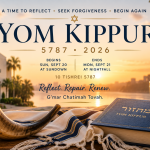
In 2026, the journey that begins with Rosh Hashanah continues through Yom Kippur, beginning at sundown on Sunday, September 20 and concluding Monday, September 21.
You can explore the complete season in our 2026 Family Guide to the Jewish High Holidays, including Rosh Hashanah, Yom Kippur, Sukkot, Shemini Atzeret, and Simchat Torah.
Celebrating Rosh Hashanah at Temple Sinai
For many people, the most enduring Rosh Hashanah memories aren’t created by any single ritual. They’re created by gathering.
It’s seeing familiar faces again. Hearing the melodies of the High Holidays. Watching children experience traditions that parents and grandparents remember from their own childhoods. It’s sharing a meal, hearing the shofar, reflecting together, and realizing that we begin the new year as part of something larger than ourselves.
Temple Sinai of North Dade welcomes families from Aventura, North Miami Beach, and throughout South Florida to come together for the High Holidays and experience this season as a community.
Whether you’ve been part of Temple Sinai for decades, are returning to Jewish life, recently moved to the area, or are simply curious about experiencing Rosh Hashanah for the first time, we invite you to join us. Explore High Holiday services and programming at Temple Sinai to learn more about celebrating Rosh Hashanah and Yom Kippur with our community.
And if you’re looking for a Jewish community to call home beyond the High Holidays, you can learn more about membership at Temple Sinai and the many opportunities to worship, learn, celebrate, and connect throughout the year.
A Sweet Beginning to 5787
Rosh Hashanah reminds us that beginnings matter.
We cannot rewrite the year behind us, but we can reflect on it. We can repair what needs repairing, express gratitude for what we have, reconnect with the people who matter, and decide how we want to enter the year ahead.
That opportunity to begin again is one of the enduring gifts of the Jewish New Year.
From all of us at Temple Sinai, Shanah Tovah U’metukah—may 5787 be a good and sweet year for you and your family.